
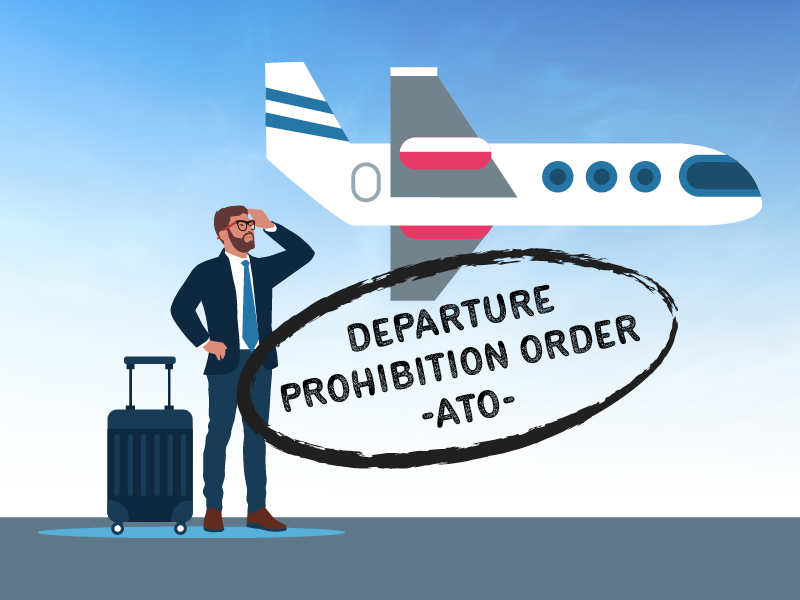
What the ATO’s stepped‑up enforcement means for travellers and business owners
The Australian Taxation Office has increased its focus on recovering unpaid tax, and one of the strongest tools it is now using more frequently is the power to stop certain taxpayers from leaving the country. Recent enforcement activity shows that individuals with significant outstanding tax debts who have not made satisfactory arrangements may be prevented from boarding international flights until their tax position is resolved.
A Departure Prohibition Order, commonly known as a DPO, is a formal order that prevents an individual from leaving Australia if they have unpaid tax liabilities and have not taken reasonable steps to address them. These orders can take effect immediately and do not require advance warning. People have already been stopped at airports in the early hours of the morning after a DPO was issued on their file. Once in place, a DPO remains active until the tax debt is paid or the person enters into an acceptable payment arrangement with the ATO.
The ATO has made clear that the increased use of these orders is part of a broader strategy to improve tax compliance and reduce the large volume of outstanding debt. The focus is on taxpayers who have the capacity to pay but choose not to, including business owners and individuals who continue discretionary spending or overseas travel while leaving overdue tax unattended. Debts involving money that should have been passed on, such as unpaid employee superannuation, PAYG withholding and GST collected from customers, are viewed particularly seriously.
For those with genuine short‑term financial difficulty, the ATO maintains that early engagement remains the best path forward. The Office generally attempts to contact taxpayers through reminders, letters and support options before escalating to more serious action. However, once the ATO forms the view that a taxpayer is deliberately avoiding payment, enforcement can move quickly and firmly.
If you are subject to a DPO, you cannot leave Australia unless the order is revoked or varied. In some cases, a person may be eligible to apply for a Departure Authorisation Certificate, which allows overseas travel for a defined period. This is only granted when the ATO is satisfied that the individual will return to Australia and that suitable arrangements are in place for the tax debt.
Anyone planning to travel overseas while carrying a significant tax liability should take steps well before their departure date. This includes confirming the status of any unpaid tax, engaging with the ATO early, and discussing possible payment plans or arrangements that might prevent enforcement action. For directors and business owners, it is also essential to be aware of other enforcement mechanisms the ATO may use alongside DPOs, such as director penalty notices, garnishee actions and credit reporting referrals.
The key message is that tax debts are now far more likely to affect international travel. Understanding the ATO’s strengthened enforcement approach and addressing debts proactively can prevent unexpected and stressful disruptions at the airport. If you are unsure about your level of risk or need support in dealing with outstanding tax obligations, professional advice can help you navigate the next steps and avoid enforcement action.